Last Updated: May 18, 2026
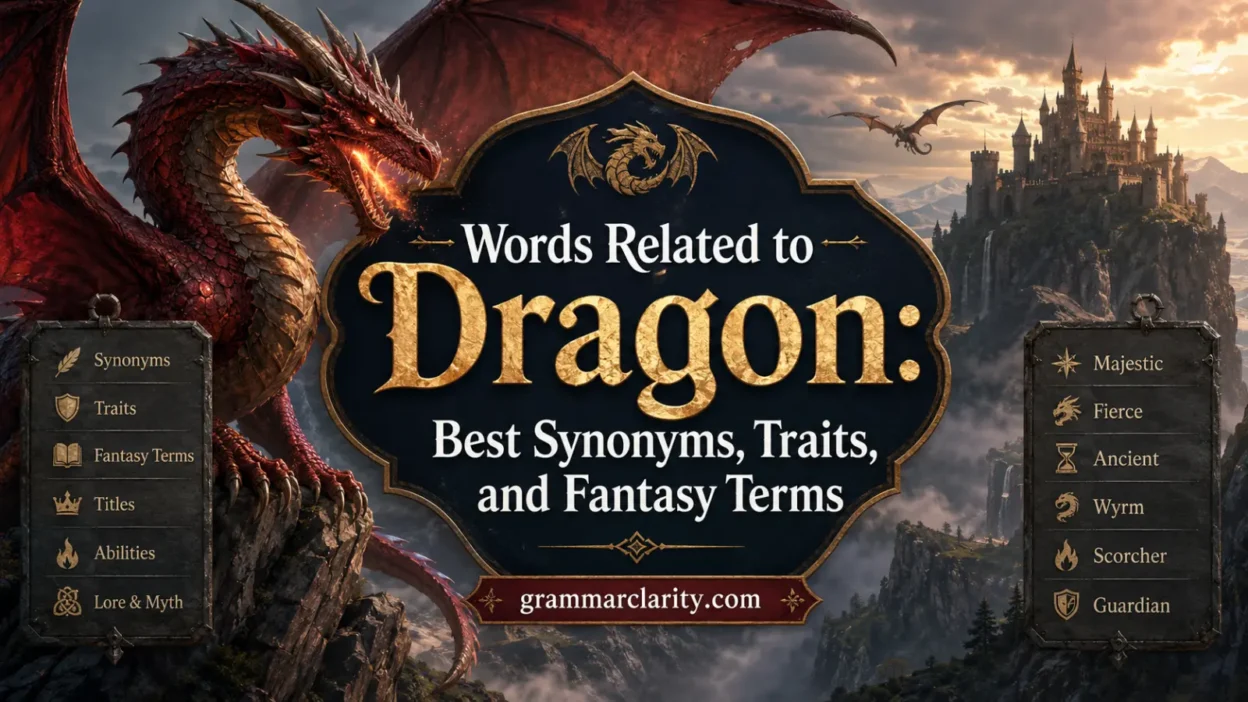
When you need words related to dragon, the best choice depends on what kind of connection you want to show. Some words are close creature names, such as wyvern, firedrake, and serpent. Others describe the way dragons are usually imagined, including scales, wings, claws, fire, and lair.
Not every dragon-related word is an exact synonym. Some words name similar mythical creatures, while others describe dragon features, fantasy settings, or story themes. A strong word list should separate these meanings clearly so your writing sounds accurate and natural.
Quick Answer: Words Related to Dragon
Strong words related to dragon include:
serpent, wyvern, basilisk, hydra, firedrake, sea serpent, monster, beast, reptile, scales, wings, claws, fire, lair, hoard, treasure, legend, myth, guardian, cave, flame, horns, fangs, and tail.
Use words like wyvern, firedrake, and serpent when you want a creature that feels close to a dragon. Use words like scales, wings, fire, lair, and hoard when you want dragon imagery, traits, or fantasy context.
What Does “Dragon” Mean?
In English, a dragon is usually described as a mythical creature with reptile-like or serpent-like features. Dragons are often imagined as large, powerful, scaly, clawed, winged, and sometimes fire-breathing.
Because dragons appear in myths, legends, fantasy stories, games, and folklore, related words usually fall into three main groups:
- Creature words
- Body and trait words
- Story and setting words
Understanding these groups helps you choose the right word for your sentence.
Core Words Related to Dragon
The table below includes some of the most useful dragon-related words. Some name similar mythical creatures, while others describe common dragon features or fantasy settings.
| Word | How It Relates to Dragon | Best Use |
|---|---|---|
| Serpent | Dragons are often described as serpent-like | Shape, movement, danger, or myth |
| Wyvern | A winged dragon-like creature | Fantasy creatures and world-building |
| Basilisk | A legendary reptile-like monster | Dark mythic or legendary writing |
| Hydra | A many-headed serpent monster | Mythology-based writing |
| Firedrake | A fire-breathing dragon | Literary or fantasy style |
| Sea serpent | A legendary ocean creature | Sea, nautical, or mythic settings |
| Monster | A broad word that can describe a dragon | Simple and general writing |
| Beast | Suggests strength, danger, and wild power | Dramatic descriptions |
| Reptile | Connects to scales, claws, and lizard-like form | Physical descriptions |
| Scales | A common visual feature of dragons | Appearance and imagery |
| Wings | Common in Western dragon imagery | Flight, shadow, or silhouette |
| Claws | A sharp and dangerous dragon feature | Action and physical description |
| Fire | Closely linked with fire-breathing dragons | Power, danger, and fantasy scenes |
| Lair | A dragon’s hidden home or den | Story setting |
| Hoard | Treasure often guarded by dragons | Fantasy and adventure scenes |
Related Words by Meaning Group
Close Creature Words
The closest creature-related words include:
serpent, wyvern, firedrake, basilisk, hydra, sea serpent, drake, and wyrm.
These words work well because they name mythical or legendary creatures with dragon-like qualities. Wyvern is especially useful in fantasy writing because it is often shown as a winged dragon-like creature. Firedrake is also a strong choice because it directly suggests a fire-breathing dragon.
Words like basilisk and hydra are related, but they are not exact replacements for dragon. They belong to the same mythic world, but they describe different legendary creatures.
Body and Trait Words
Useful physical description words include:
reptile, scales, wings, claws, horns, tail, fangs, flame, smoke, armor-like skin, and fiery breath.
These words are not synonyms for dragon, but they help create the image of one. They are especially useful in fantasy writing, game descriptions, classroom vocabulary, and creative storytelling.
For example, instead of repeating the word dragon, you can describe its:
- bronze scales
- curved claws
- wide wings
- sharp fangs
- fiery breath
- smoke-filled nostrils
These details make the writing more vivid and easier to picture.
Story and Setting Words
Strong story-related words include:
lair, hoard, treasure, legend, myth, kingdom, battle, guardian, cave, mountain, castle, knight, and ancient curse.
These words do not mean dragon, but they often appear in dragon stories. They help build the fantasy world around the creature.
A dragon may guard a hoard, sleep in a lair, appear in an old legend, attack a kingdom, or protect an ancient treasure.
Close Synonyms vs. Broader Related Words
Many word lists become confusing because they mix exact, close, and broad related words together.
A close related word names a creature that already feels dragon-like. Words such as wyvern, firedrake, wyrm, and sea serpent belong in this group.
A broader related word connects to dragons through appearance, mood, body type, or story role. Words such as scales, fire, wings, claws, monster, lair, and hoard fit this group.
Both types are useful, but they should not be treated as the same thing.
For example:
- Wyvern is a dragon-like creature.
- Scales are a physical feature.
- Lair is a place connected with dragons.
- Hoard is a story object often guarded by dragons.
Keeping these differences clear makes your writing stronger and more accurate.
Words Related to Dragon by Context
For Fantasy Fiction
Use words such as:
wyvern, firedrake, wyrm, lair, hoard, beast, ancient, winged, guardian, flame, cavern, and treasure.
These choices create a strong fantasy feeling. They work well in stories, games, role-playing settings, and world-building.
Example:
The ancient wyvern circled above the ruined tower, guarding the treasure hidden deep within its lair.
For Students or General Readers
Use simpler words such as:
monster, serpent, reptile, wings, fire, scales, claws, cave, and legend.
These words are easy to understand and still clearly connect to dragons.
Example:
A dragon is often described as a large monster with scales, wings, claws, and the ability to breathe fire.
For Mythology-Based Writing
Use words such as:
hydra, basilisk, sea serpent, mythic beast, legendary creature, ancient monster, wyrm, and serpent.
These words make your writing feel closer to old myths, legends, and traditional stories.
Example:
The tale described a serpent-like creature that reminded readers of both a dragon and a sea monster.
For Visual Description
Use words such as:
scales, horns, claws, tail, fangs, wings, smoke, flame, glowing eyes, and armor-like skin.
These words help readers picture the dragon instead of only naming it.
Example:
The creature’s black scales, curved horns, and glowing eyes made it look like a dragon from an ancient legend.
Example Sentences with Dragon-Related Words
Here are some natural example sentences using words related to dragon:
- The cave painting showed a coiled serpent that looked almost like a dragon.
- The game describes the wyvern as a smaller, faster cousin of the true dragon.
- A winged beast rose from the mountain, its bronze scales shining in the sun.
- The old legend told of a firedrake that guarded the northern pass.
- Deep inside the cave, the dragon slept beside its golden hoard.
- The knight entered the dragon’s lair with a sword in one hand and a shield in the other.
- For a classroom poster, words like myth, legend, monster, fire, and wings are simple and useful dragon-related terms.
- The creature’s sharp claws, long tail, and smoky breath made it look terrifying.
Best Everyday Words Related to Dragon
For most writing, the best all-purpose dragon-related words are:
serpent, wyvern, monster, beast, scales, wings, fire, claws, lair, and hoard.
These words are strong because they are clear, familiar, and flexible. Serpent and wyvern add mythic flavor. Monster and beast are easy to understand. Scales, wings, claws, and fire create an instant dragon image. Lair and hoard bring in the classic fantasy setting often connected with dragons.
FAQs
What is another word for dragon?
Some close words for dragon include wyvern, firedrake, wyrm, serpent, and drake. However, these words are not always exact synonyms. Their meanings can change depending on the story, myth, or fantasy setting.
Is wyvern another word for dragon?
A wyvern is often treated as a dragon-like creature, especially in fantasy writing. However, it is usually considered a specific type of mythical creature rather than a perfect synonym for dragon.
What words describe a dragon?
Words that describe a dragon include scaly, winged, clawed, fire-breathing, serpent-like, ancient, powerful, fierce, mythical, and legendary.
What are fantasy words related to dragon?
Fantasy words related to dragon include lair, hoard, treasure, kingdom, guardian, cavern, flame, beast, wyvern, firedrake, and ancient legend.
Is serpent related to dragon?
Yes, serpent is strongly related to dragon because many dragons are described as snake-like or reptile-like creatures. In some myths, dragons are shown as giant serpents rather than winged monsters.
Conclusion
The strongest words related to dragon are not all the same type of word. Some are close creature terms, such as wyvern, firedrake, wyrm, and serpent. Some describe physical details, such as scales, wings, claws, fangs, and fire. Others belong to dragon stories, such as lair, hoard, treasure, legend, and guardian.
When you keep these groups separate, your word choice becomes clearer, stronger, and more useful for readers. Whether you are writing a fantasy story, building a vocabulary list, or describing a mythical creature, the best dragon-related word depends on the exact meaning you want to express.