

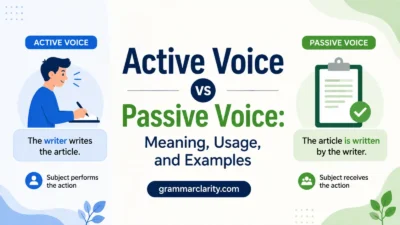
Active Voice vs Passive Voice: Meaning, Usage, and Examples
Many writers struggle with the choice between active voice and passive voice. Both are grammatically correct, but they create different…
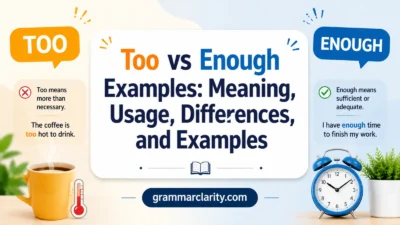
Too vs Enough Examples: Meaning, Usage, Differences, and Examples
Many English learners understand the basic meanings of too and enough, yet they often struggle when deciding which one fits a sentence…
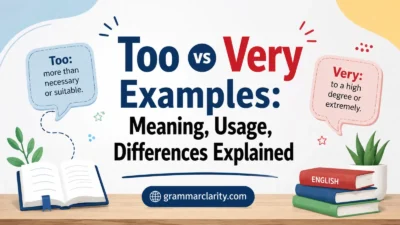
Too vs Very Examples: Meaning, Usage, Differences Explained
Many English learners and even native speakers occasionally wonder whether they should use too or very in a sentence. Both words can increase…
Just vs Only Examples: Meaning, Usage, Differences, and Correct Use
Many English learners and native speakers wonder whether they should use just or only in a sentence. The confusion is understandable because…
Still vs Yet Examples: Meaning, Differences, and Correct Usage
Many English learners and even native speakers occasionally hesitate when choosing between still and yet. Both words often relate to time.…
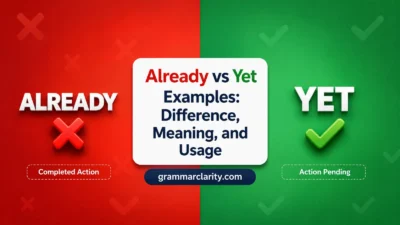
Already vs Yet Examples: Difference, Meaning, and Usage
Many English learners and native speakers occasionally hesitate when choosing between already and yet. Both words relate to time, and both…
Either vs Neither Examples: Meaning, Rules, and Correct Usage
Many English learners and even native speakers occasionally struggle with either and neither. The confusion makes sense because both words…
All vs Whole Examples: Meaning, Usage, and Key Difference
Many English learners and native speakers occasionally hesitate when choosing between all and whole. Both words can refer to completeness, and…
Each vs Every Examples: Meaning, Usage, and Key Differences
Many English learners and native speakers occasionally hesitate when choosing between each and every. Both words refer to individual people or…

Too vs Very: Meaning, Usage, Differences, and Examples
Many English learners confuse too and very because both words are used to strengthen descriptions. They often appear before adjectives and…