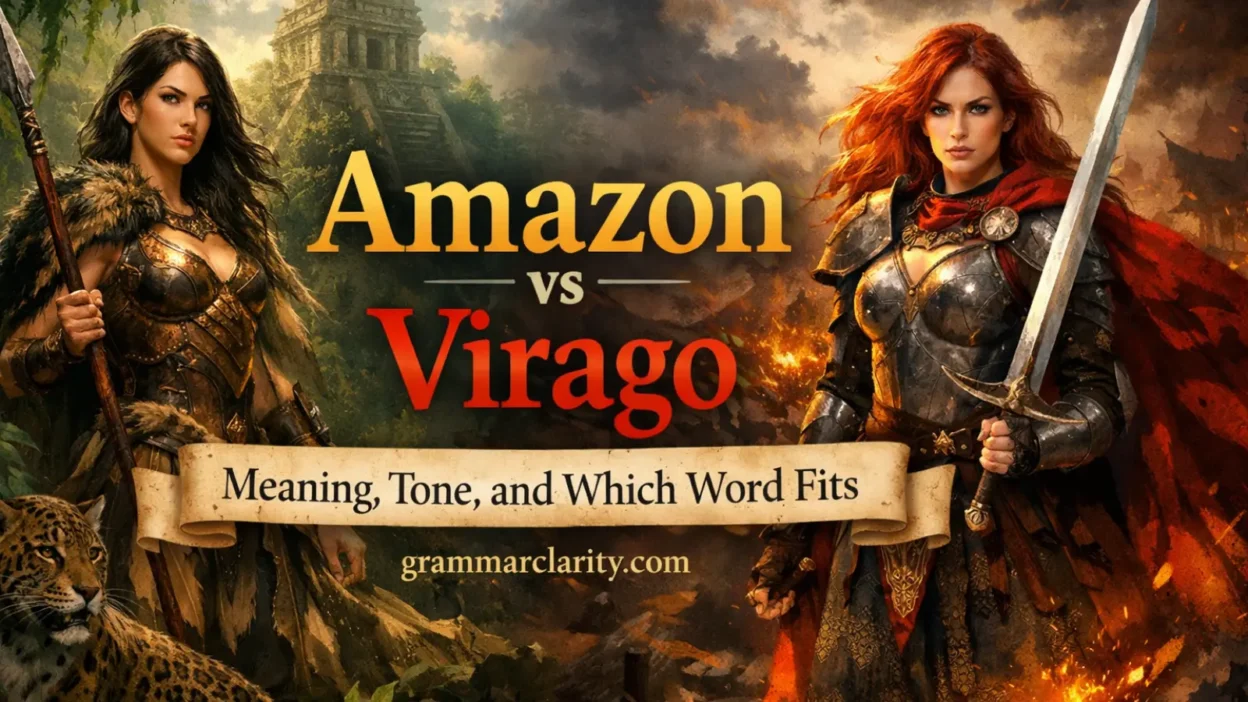
Amazon vs Virago is a word-choice question, not a simple synonym question.
At first glance, the two words seem close because both have been used for a strong or imposing woman. But in modern English, they do not land the same way. One usually sounds literary but admiring or neutral. The other often sounds harsh, old-fashioned, or openly insulting.
That difference matters. If you pick the wrong one, your sentence can come off much more judgmental than you intended.
Quick Answer
Use amazon when you mean a tall, strong, imposing, or warrior-like woman, especially if the tone is neutral, descriptive, or admiring.
Use virago only with care. In modern English, it usually suggests a loud, overbearing, bad-tempered, or aggressive woman. Although older usage could be positive, many readers today hear it as an insult.
Why People Confuse Them
People confuse these words because they overlap in older dictionary history.
Both have connections to female strength, courage, or warrior imagery. That makes them look interchangeable on the surface. But modern tone matters more than old overlap.
Today, amazon usually points to physical presence or mythic strength. Virago more often points to behavior, especially behavior the writer sees as domineering or abrasive.
So the confusion comes from shared older meaning but very different present-day effect.
Key Differences At A Glance
| Context | Best Choice | Why |
| You mean a tall, powerful, statuesque woman | amazon | It usually sounds descriptive or admiring |
| You mean a woman portrayed as loud or overbearing | virago | It carries a negative judgment in modern use |
| You want a mythic or warrior-like feel | amazon | It connects naturally to the legendary female warriors |
| You want modern, natural prose | amazon | It is easier to use without sounding archaic or hostile |
| You want to criticize someone sharply | virago | It is stronger, harsher, and more loaded |
Meaning and Usage Difference
An amazon in common English usually means a tall, strong, forceful woman. It often carries a visual sense. The reader may picture someone statuesque, athletic, commanding, or physically formidable.
A virago usually means an overbearing, ill-tempered, or aggressive woman. It often carries a behavioral judgment. The reader may hear criticism before they hear description.
That is the core difference:
- amazon leans toward strength and presence
- virago leans toward hostility and disapproval
Because of that, they are not safe substitutes for each other.
Tone, Context, and Formality
Both words are somewhat literary rather than everyday conversation words, but they differ sharply in tone.
Amazon can sound elevated, vivid, or slightly old-fashioned, yet still readable in modern prose. It may appear in fiction, cultural writing, profiles, or stylized description.
Virago feels much more marked. It can sound archaic, severe, or intentionally pointed. In many modern contexts, it reads as a loaded insult rather than a neutral description.
In plain American English, amazon is the safer choice if you want strong without sounding hostile.
Which One Should You Use?
Choose amazon when you want to emphasize:
- height
- strength
- commanding presence
- a heroic or mythic feel
- admiration mixed with awe
Choose virago only when you intentionally want to emphasize:
- aggressiveness
- domineering behavior
- bad temper
- an old-fashioned or literary insult
If you are not trying to criticize, virago is usually the wrong choice.
When One Choice Sounds Wrong
If you write, “She was a virago of a basketball forward,” many readers may think you mean she was nasty or overbearing, not simply tall and powerful. That makes virago a poor fit.
If you write, “The novel paints the tyrannical aunt as an amazon,” the sentence may miss the sharper moral judgment you want. Amazon can suggest force, but not necessarily scolding or domineering behavior.
Here is the practical test:
If the point is physical power or imposing presence, use amazon.
If the point is abrasive personality or insulting characterization, use virago.
Common Mistakes (and Quick Fixes)
One common mistake is treating the words as equal synonyms for “strong woman.”
Quick fix: Do not swap one for the other without checking tone.
Another mistake is using virago in praise.
Quick fix: Unless you are deliberately using an older or reclaimed sense, avoid it in positive description.
A third mistake is using Amazon with a capital letter when you mean the common noun.
Quick fix: Use lowercase amazon for the common-noun sense. Keep Amazon for the mythic people, the river, the company, or other proper names.
Everyday Examples
“She entered the room with the calm confidence of an amazon.”
“The reporter described the general as an amazon, tall and battle-ready.”
“In the play, the mayor is treated like a virago, always shouting down everyone around her.”
“The old novel calls the landlady a virago, which tells you the narrator dislikes her.”
“She is tall, athletic, and imposing” works better than “She is a virago” if you do not mean criticism.
“The villain sees every outspoken woman as a virago” works because the word itself reveals his bias.
Dictionary-Style Word Details
Verb
Neither amazon nor virago is standardly used as a verb in current American English.
Noun
amazon: a noun used for a tall, strong, forceful, or warrior-like woman.
virago: a noun usually used for a loud, overbearing, ill-tempered, or aggressive woman, though older usage could be positive.
Synonyms
amazon: warrior, giantess, powerhouse, strong woman, statuesque woman
virago: termagant, shrew, harridan, scold, battle-ax
These are not perfect substitutes, but they show the tonal direction of each word.
Example Sentences
amazon: The film casts her as an amazon who leads from the front.
amazon: At six feet tall, she had the presence of an amazon.
virago: The memoir unfairly turns every demanding woman into a virago.
virago: In that review, the critic paints the director as a virago, not a leader.
Word History
Amazon comes from the legendary female warriors of Greek tradition, which helps explain its association with strength and martial imagery.
Virago comes from Latin and once had a more honorable sense tied to strength, courage, and heroic womanhood. Over time, however, the word developed a strongly negative everyday sense in English.
That history explains why the two words can look related while sounding very different now.
Phrases Containing
amazon: amazonian build, amazon figure, mythic amazon
virago: old virago, shrieking virago, cast as a virago
These are pattern examples rather than fixed expressions, and they show the usual tone each word attracts.
Conclusion
In modern English, amazon and virago are not interchangeable.
Use amazon for a woman who seems tall, strong, imposing, or warrior-like. It usually sounds neutral, vivid, or admiring. Use virago only when you mean to suggest a harsh, overbearing, or bad-tempered woman, because that is the sense many readers will hear first.
When in doubt, choose amazon for strength and presence. Choose virago only for deliberate negative judgment.