You may see lol in texts, group chats, comments, memes, and social posts. It is one of the most common short forms in everyday online English. Many learners know the basic meaning, but the real use can feel less clear.
That is because lol does not always mean someone is truly laughing out loud. In many messages, it shows light humor, warmth, or a softer tone. This article explains what lol means, how people use it today, how to say it, and when it fits best.
Quick Answer
lol meaning is usually “laughing out loud” or “laugh out loud.”
In modern texting, it often shows mild amusement, friendliness, or a joking tone.
It is informal and works best in casual messages.
TL;DR
• lol means “laughing out loud”
• It is mostly used in casual writing
• It often means mild amusement, not real laughter
• It can soften a message
• It may be said out loud too
• Avoid it in serious or formal contexts
What Does LOL Mean?
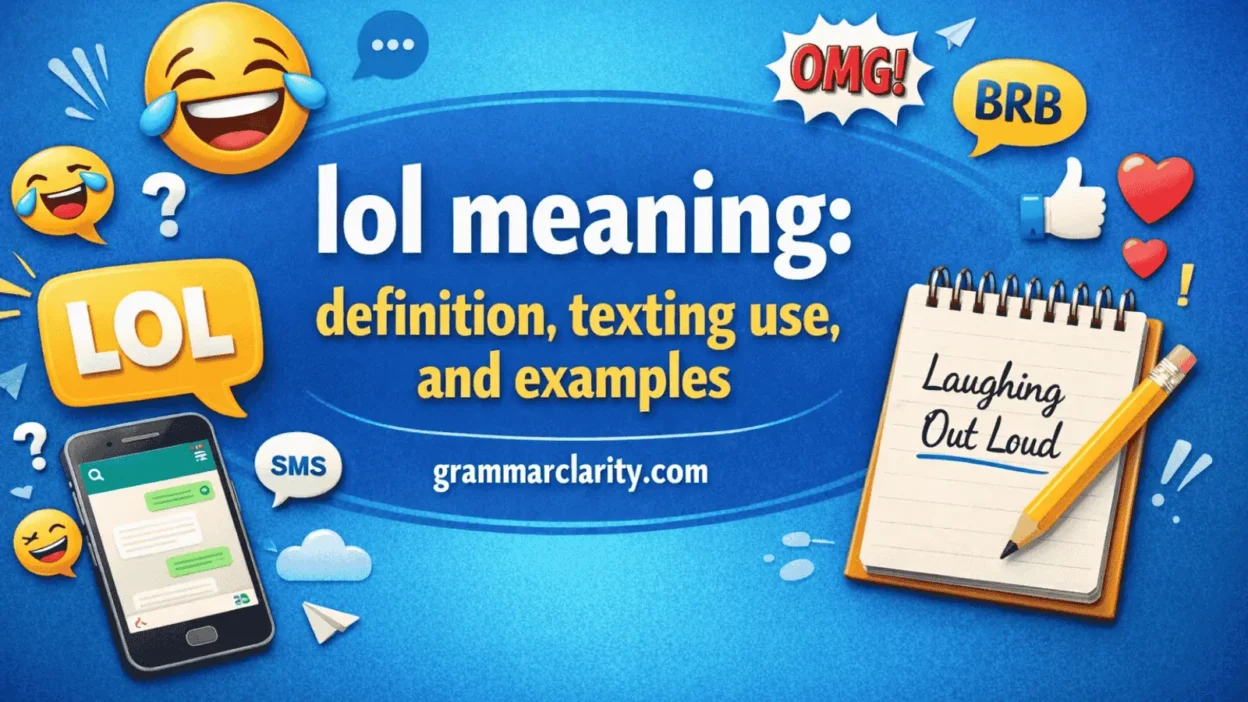
At its core, LOL means “laughing out loud” or “laugh out loud.” It began as a short way to react to something funny in online writing.
In plain English, it tells the other person, “That was funny,” or “I am amused.” Sometimes it points to real laughter. Sometimes it only shows a smile.
What LOL Means in Modern Use
Today, lol often does more than show laughter. It can make a message sound warmer, less harsh, or more playful.
For example:
• “I forgot my keys again lol”
• “That meeting could have been an email lol”
• “Nice try lol”
In these cases, the sender may not be laughing hard. They may be easing the tone. This is why lol can feel friendly in one message and dry or awkward in another.
Pronunciation: How to Say LOL
People say LOL in two common ways:
• “ell-oh-ell”
• “loll” or “lawl”
In writing, pronunciation does not matter much. In speech, both forms are understood in casual American English. If you are unsure, “ell-oh-ell” is the safest choice.
A common confusion is thinking there is only one correct spoken form. In real life, usage varies.
Part of Speech: What Kind of Term Is LOL?
LOL is mainly an abbreviation used as an interjection. That means it often stands alone or reacts to something.
Example:
“LOL, that dog looks so proud.”
It can also act like a verb in very informal English.
Examples:
“I literally lolled.”
“That made me LOL.”
So, the most useful beginner answer is this:
• Main role: abbreviation
• Common use: interjection
• Possible extra use: verb in very casual English
Where People Use LOL
You will mostly see lol in informal spaces, such as:
• text messages
• social media comments
• direct messages
• group chats
• gaming chats
• casual online posts
You may also hear people say it out loud in conversation. That is informal too.
How to Use LOL Naturally
The easiest way to use lol is after something funny or lightly embarrassing.
Examples:
• “I sent the message to the wrong group lol.”
• “That cat looks like a tiny boss lol.”
• “You were right lol.”
It can go at the end of a sentence. It can also appear at the start, but that is less common.
A useful rule: use lol when you want your message to feel light. Do not use it just to fill space in every text.
Small comparison table
| Context | Best Choice | Why |
|---|---|---|
| A mild joke in text | lol | Light and natural |
| Something truly hilarious | lmao / haha | Stronger reaction |
| Formal work email | no lol | Too casual |
When Not to Use LOL
Avoid lol in serious, sad, or formal messages.
Examples where it may sound wrong:
• bad news
• apologies
• job applications
• formal school writing
• difficult work discussions
For instance, “Sorry for the mistake lol” can sound careless. A better version is, “Sorry for the mistake. I’ll fix it right away.”
LOL vs. Similar Terms
lol is common, but it is not the only option.
• haha often sounds more natural and more direct
• lmao sounds stronger and more expressive
• rofl is older and less common in everyday texting
If something is only a little funny, lol works well. If it is very funny, many people choose haha or lmao instead.
Synonyms, Antonyms, and Related Terms
There is no perfect synonym for lol, because it carries both meaning and tone. Still, some close options exist:
• haha — simple laughter
• lmao — stronger laughter
• hehe — softer or playful laughter
• jk — “just kidding,” often used with jokes
There is no exact antonym. A message without humor is not the opposite of lol in a neat way. The closest idea is a serious or literal tone.
Common Mistakes With LOL
One mistake is using lol in a message that should sound serious. That can make you seem rude or careless.
Another mistake is reading every lol as real laughter. Very often, it only marks a light tone.
A third mistake is overusing it.
Wrong:
“Thanks lol I’ll send it lol after lunch lol.”
Better:
“Thanks. I’ll send it after lunch.”
Mini Quiz
1. What does lol usually mean?
a) lots of luck
b) laughing out loud
c) listen on loop
2. Is lol formal or informal?
a) formal
b) informal
3. Which sentence sounds more natural?
a) “Please review the contract lol.”
b) “I wore two different socks lol.”
4. Can lol work like a verb in casual English?
a) yes
b) no
Answer key:
- b
- b
- b
- a
FAQ
What does LOL mean in a text?
It usually means “laughing out loud” or “laugh out loud.” In many texts, though, it only shows mild amusement or a friendly tone.
Is LOL still used today?
Yes, people still use it. It is common in casual texting, though style can vary by age, platform, and friend group.
Is LOL rude?
Not by itself. It can sound rude if the topic is serious or if the tone feels dismissive.
Do people actually laugh when they type LOL?
Sometimes, yes. But often they are only signaling that something feels funny, light, or not too serious.
Can LOL be a verb?
Yes, in very casual English. People sometimes say things like “I lolled” or “That made me LOL.”
How do you pronounce LOL?
The two common ways are “ell-oh-ell” and “loll.” In careful speech, “ell-oh-ell” is a safe choice.
What is the difference between LOL and LMAO?
LOL is milder. LMAO usually shows a stronger reaction and sounds more intense.
Conclusion
The basic lol meaning is simple: it shows laughter or amusement.
But in real messages, it often helps make a text feel softer and more relaxed.
Now that you know how it works, watch for it in chats and try using it in the right casual moments.