
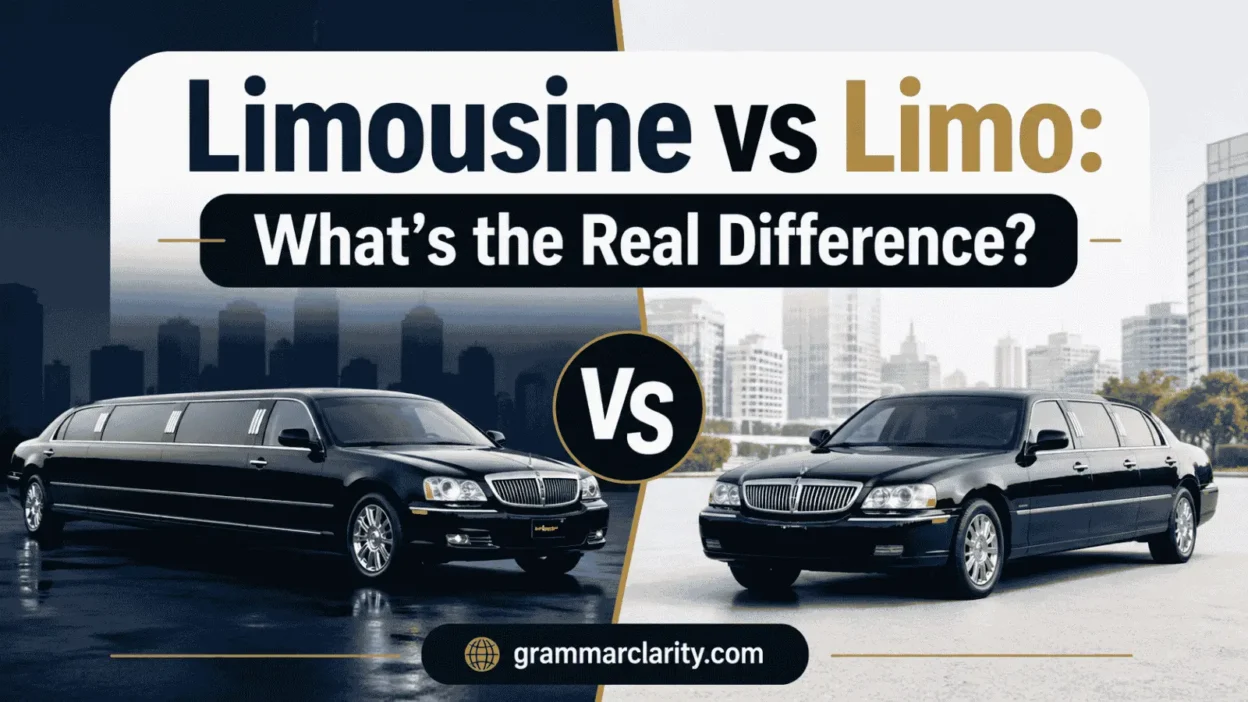
People often treat limousine and limo as if they were two different vehicles. In everyday American English, though, they usually refer to the same thing. The real difference is not basic meaning. It is tone.
That is why this comparison matters. In one sentence, limo sounds natural and conversational. In another, it can sound too casual or slightly promotional. Limousine often feels more formal, polished, or precise.
Quick Answer
Use limousine when you want a more formal, professional, or polished word. Use limo when you want the shorter, more casual version.
In most situations, limo is simply an informal shortening of limousine, not a different category. That means the choice usually depends on audience, tone, and context more than strict meaning.
Why People Confuse Them
People get confused because the two words are closely tied, and in many cases they are interchangeable.
They also appear in slightly different settings. Rental companies, event pages, and formal service descriptions often prefer limousine because it sounds more upscale. Regular conversation usually leans toward limo because it is shorter and easier to say.
Another source of confusion is that people sometimes use limo to suggest a stretch luxury car specifically, while limousine can sound broader or more official. In normal usage, though, that distinction is often more stylistic than mandatory.
Key Differences At A Glance
| Context | Best Choice | Why |
| Formal service description | limousine | Sounds more professional and polished |
| Casual conversation | limo | Feels natural and easy to say |
| Wedding or corporate booking page | limousine | Matches premium or formal branding |
| Text message to a friend | limo | Shorter and more conversational |
| News or editorial writing | limousine | Often reads more precise on first mention |
| Repeated mentions after first use | limo | Can keep the wording lighter and less stiff |
Compact comparison block
- Limousine = more formal, fuller, more polished
- Limo = shorter, more casual, more conversational
- Meaning = usually the same in ordinary use
- Main difference = tone, not core definition
Meaning and Usage Difference
In standard American usage, limousine is the full word and limo is the shortened form. Most of the time, both point to a large, expensive vehicle associated with chauffeur service, luxury travel, special events, or airport transportation.
The difference shows up in how the word lands with a reader.
Limousine can sound more official:
“We reserved a limousine for the company’s executive guests.”
Limo can sound more relaxed:
“We grabbed a limo for prom.”
Neither sentence is wrong. The better choice depends on whether you want a formal or everyday voice.
Tone, Context, and Formality
This is where the choice really matters.
Limousine tends to work better in:
- contracts
- brochures
- business writing
- formal event planning
- polished editorial copy
Limo tends to work better in:
- casual speech
- texts
- social captions
- everyday storytelling
- conversational marketing
That does not mean limo is sloppy. It just sounds less formal. In the wrong setting, it can make serious copy feel too chatty. In the right setting, it keeps the writing natural.
Which One Should You Use?
Use limousine when you want the wording to feel refined, professional, or official.
Use limo when you want the wording to feel direct, friendly, and natural.
A simple rule works well here: if you would also avoid slangy or overly casual wording in the same piece, go with limousine. If the piece sounds like natural conversation, limo will usually fit better.
For many readers, limo service sounds perfectly normal in ads and everyday speech. But limousine service still sounds a bit more formal and upscale. That slight tone difference is often the real reason writers choose one over the other.
When One Choice Sounds Wrong
Sometimes the issue is not correctness. It is fit.
Limo may sound off in:
- legal agreements
- luxury brand copy that aims for elegance
- formal press materials
- ceremonial or executive transportation descriptions
Limousine may sound off in:
- casual dialogue
- quick captions
- friendly personal writing
- informal stories where the full word feels stiff
For example, “My cousin rented a limousine for prom” is fine, but many Americans would more naturally say “rented a limo for prom.” On the other hand, “Our company provides limo transportation for diplomatic delegations” may sound less polished than “limousine transportation.”
Common Mistakes (and Quick Fixes)
One common mistake is assuming the words always signal two completely different things.
Fix: Treat limo as the casual shortened form unless the context clearly needs a more specific distinction.
Another mistake is forcing limousine into very casual writing.
Fix: In everyday conversation or relaxed copy, limo often sounds smoother.
A third mistake is using limo in a context that calls for a premium tone.
Fix: If the writing needs to sound elegant, official, or high-end, choose limousine.
A final mistake is repeating the full word too many times in light, readable copy.
Fix: After the first mention, limo can make the writing flow more naturally if the tone allows it.
Everyday Examples
Here are natural examples that show the difference in use.
Formal:
“The hotel can arrange limousine service from the airport.”
“The couple departed the reception in a black limousine.”
“The executive team traveled by limousine to the venue.”
Casual:
“We split the cost of a limo for the concert.”
“She posted photos of the limo ride to prom.”
“They hired a limo for the birthday party.”
Mixed but natural:
“We booked a limousine for the wedding, but everyone kept calling it a limo.”
That sentence works because it reflects how people actually speak.
Dictionary-Style Word Details
Verb
Neither limousine nor limo is commonly used as a standard verb in ordinary edited American English. These are primarily noun forms.
Noun
Limousine: the full noun form, usually used for a luxury vehicle, often chauffeur-driven, and sometimes for airport transport depending on context.
Limo: the shortened noun form of limousine, usually carrying the same basic meaning in everyday use.
Synonyms
For limousine, near alternatives may include:
- chauffeur car
- luxury car
- town car
- executive car
For limo, near alternatives are usually the same in context, though limo itself is the casual substitute for limousine.
These are not perfect replacements in every sentence, since each one carries its own tone and context.
Example Sentences
Limousine
“The theater arranged a limousine for the guest speaker.”
“A white limousine waited outside the hotel entrance.”
Limo
“We took a limo downtown after dinner.”
“He said the limo showed up ten minutes early.”
Word History
Limousine is the older full form. Limo developed later as a shortened version used in ordinary speech and writing. In current American English, the shorter form is widely understood and widely used, especially in casual contexts.
Phrases Containing
Common phrases with limousine:
- limousine service
- limousine driver
- limousine company
Common phrases with limo:
- limo ride
- limo service
- stretch limo
Conclusion
For most American readers, limousine and limo refer to the same basic thing. The real choice is about tone.
Pick limousine when you want the writing to sound formal, polished, or professional. Pick limo when you want it to sound natural, casual, and conversational. If you are unsure, think less about the vehicle and more about the setting. The right word is usually the one that matches the voice of the sentence.