Has been vs have been is a subject-verb agreement choice. Both phrases are correct, but they do not work with the same subjects.
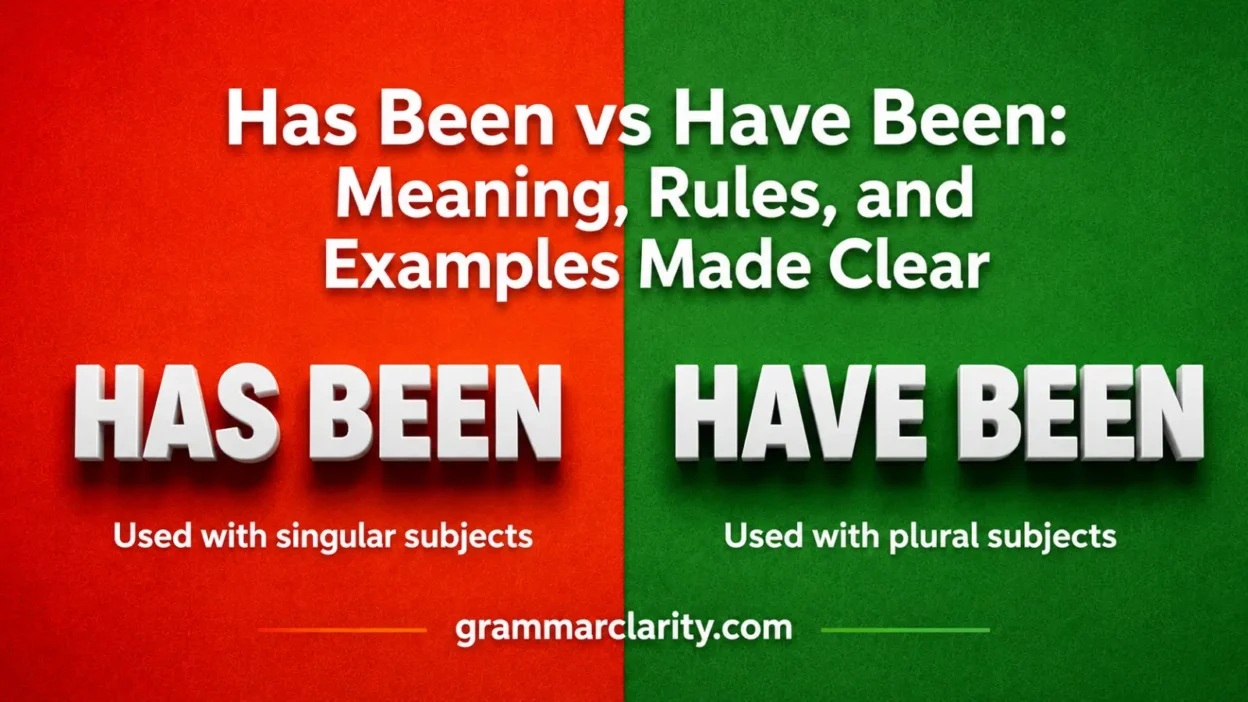
Use has been with he, she, it, and singular nouns. Use have been with I, you, we, they, and plural nouns.
The difference is not about meaning, politeness, or tense by itself. It is mainly about which subject comes before the phrase.
Quick Answer
Use has been when the subject is singular and third person.
Examples:
She has been working late.
The store has been closed all morning.
It has been a long week.
Use have been with I, you, we, they, and plural subjects.
Examples:
I have been waiting outside.
You have been very helpful.
They have been planning the trip for months.
Compact comparison:
- has been = correct with he, she, it, and one person or thing
- have been = correct with I, you, we, they, and more than one person or thing
Why People Confuse Them
People confuse has been and have been because both phrases use been, and both often point to something that started before now.
The real choice happens in the first word: has or have. That word must agree with the subject.
The confusion also grows because contractions hide the difference. For example, she’s been means she has been, while they’ve been means they have been. In speech, those shortened forms can make the rule less obvious.
Key Differences At A Glance
| Context | Best Choice | Why |
|---|---|---|
| He, she, or it | has been | Third-person singular subjects take has |
| One person | has been | A singular noun usually takes has |
| One thing or place | has been | A single subject takes has |
| I | have been | I takes have |
| You | have been | You takes have in singular and plural use |
| We or they | have been | Plural pronouns take have |
| More than one person or thing | have been | Plural nouns take have |
Meaning and Usage Difference
Has been and have been often express the same kind of time relationship. They can describe a state, condition, experience, or ongoing action connected to the present.
The difference is the subject.
Correct:
Maria has been quiet today.
Maria and Jordan have been quiet today.
In the first sentence, Maria is one person, so has been is correct. In the second sentence, Maria and Jordan are two people, so have been is correct.
Both forms can also appear before an -ing verb.
She has been studying all afternoon.
They have been studying all afternoon.
The action is similar. The subject controls the form.
Tone, Context, and Formality
There is no formal-versus-informal split between has been and have been. One is not more professional than the other.
The correct choice depends on grammar, not tone.
In formal writing, you may write the full form:
The report has been reviewed.
The employees have been notified.
In everyday speech or casual writing, contractions are common:
The report’s been reviewed.
They’ve been notified.
For clear business, academic, or instructional writing, the full form is often easier to read.
Which One Should You Use?
Choose based on the subject.
Use has been after:
he
she
it
a singular noun
a singular name
one company, team, place, item, or idea
Examples:
He has been patient.
The company has been expanding.
This issue has been resolved.
Use have been after:
I
you
we
they
plural nouns
compound subjects joined by and
Examples:
I have been busy.
We have been careful.
The files have been updated.
Rachel and Sam have been invited.
When One Choice Sounds Wrong
A choice sounds wrong when the subject and helping verb do not match.
Incorrect:
She have been waiting.
The customers has been complaining.
Correct:
She has been waiting.
The customers have been complaining.
Questions follow the same rule, even when the word order changes.
Correct:
Has she been waiting long?
Have the customers been calling today?
Do not let the word order in a question distract you. Find the subject, then choose has or have.
Common Mistakes (and Quick Fixes)
One common mistake is using have been after a singular noun.
Incorrect: The manager have been busy.
Correct: The manager has been busy.
Another mistake is using has been after a plural noun.
Incorrect: The reports has been delayed.
Correct: The reports have been delayed.
Writers also make mistakes with compound subjects.
Incorrect: My brother and sister has been helping.
Correct: My brother and sister have been helping.
A simple fix is to replace the subject with a pronoun. If the subject becomes he, she, or it, use has been. If it becomes they, use have been.
Everyday Examples
She has been feeling better since Monday.
He has been looking for a new apartment.
The laptop has been running slowly.
Our neighborhood has been quieter this week.
The teacher has been reviewing the essays.
I have been trying to call you.
You have been very patient.
We have been looking forward to the weekend.
They have been working on the kitchen.
The kids have been playing outside.
Notice how the time idea can stay the same while the subject changes the phrase.
She has been working from home.
They have been working from home.
Dictionary-Style Word Details
Verb
Has been and have been are verb phrases. Each one combines a helping verb, has or have, with been, the past participle of be.
They can describe a continuing action, a current result, a condition, or a completed passive action.
Examples:
The door has been painted.
The doors have been painted.
Noun
Has been and have been are not normally nouns.
Be careful with has-been as a hyphenated noun. It means a person who was once successful or important but is no longer seen that way. That is a different word from the verb phrase has been.
Example:
He is not a has-been; he is still working successfully.
That noun meaning does not apply to have been.
Synonyms
There is no single perfect synonym for has been or have been because the best replacement depends on the sentence.
Possible alternatives include:
has existed
have existed
has remained
have remained
has continued
have continued
has become
have become
For example, The policy has been in place for years can sometimes become The policy has existed for years. The wording changes, but the core idea remains close.
Example Sentences
The office has been open since 8 a.m.
The offices have been open since 8 a.m.
My phone has been acting strange today.
My apps have been acting strange today.
This plan has been useful.
These plans have been useful.
Word History
Both phrases come from forms of the verb be used with have as a helping verb. In modern English, the important practical rule is simple: has matches third-person singular subjects, while have matches I, you, we, they, and plural subjects.
Phrases Containing
Common phrases with has been include:
has been working
has been waiting
has been closed
has been approved
has been updated
Common phrases with have been include:
have been working
have been waiting
have been closed
have been approved
have been updated
The words after been may be the same. The subject decides whether the phrase begins with has or have.
FAQs
Is it “has been” or “have been”?
Both are correct, but they work with different subjects. Use has been with he, she, it, and singular nouns. Use have been with I, you, we, they, and plural nouns.
When should I use “has been”?
Use has been when the subject is one person, place, thing, or idea.
Examples:
She has been busy all day.
The meeting has been postponed.
It has been raining since morning.
When should I use “have been”?
Use have been with I, you, we, they, or any plural subject.
Examples:
I have been waiting for you.
We have been working on the project.
The students have been studying hard.
Is “I has been” correct?
No. I has been is incorrect. The correct form is I have been.
Correct: I have been feeling tired today.
Incorrect: I has been feeling tired today.
Is “you has been” correct?
No. You has been is incorrect. Always use you have been, whether you means one person or more than one person.
Correct: You have been very helpful.
Incorrect: You has been very helpful.
Is “they has been” correct?
No. They has been is incorrect. Use they have been because they takes have.
Correct: They have been waiting outside.
Incorrect: They has been waiting outside.
What is the difference between “she has been” and “she have been”?
She has been is correct. She have been is incorrect because she is a third-person singular subject.
Correct: She has been studying.
Incorrect: She have been studying.
Can “has been” and “have been” mean the same thing?
Yes, they can express the same time idea, but they must match different subjects.
Example:
He has been working late.
They have been working late.
The action is similar. The subject changes the verb form.
Conclusion
The difference between has been vs have been is simple once you look at the subject.
Use has been with he, she, it, and singular nouns. Use have been with I, you, we, they, and plural nouns.
The meaning is often similar, but the grammar is different. When you are unsure, find the subject first. If the subject is one third-person person, place, thing, or idea, choose has been. If the subject is I, you, we, they, or plural, choose have been.