

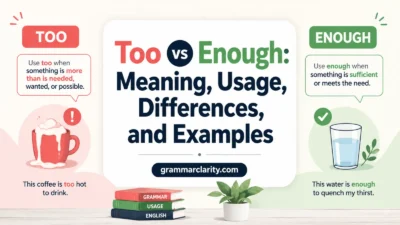
Too vs Enough: Meaning, Usage, Differences, and Examples
Many English learners struggle with too and enough because both words talk about quantity, degree, or adequacy. They often appear in similar…
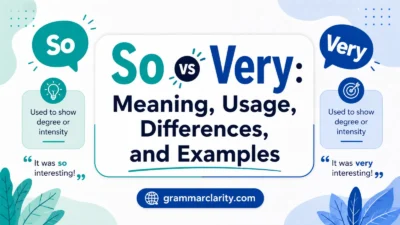
So vs Very: Meaning, Usage, Differences, and Examples
Many English learners wonder whether they should use so or very. Both words are common intensifiers that make adjectives and adverbs stronger.…
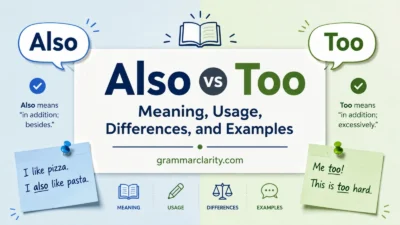
Also vs Too: Meaning, Usage, Differences, and Examples
Many English learners and even native speakers occasionally wonder whether they should use also or too. Both words are common in everyday…
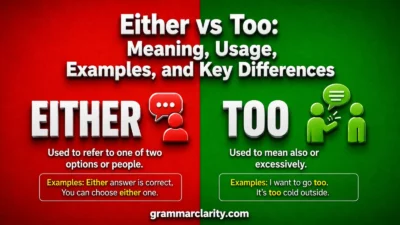
Either vs Too: Meaning, Usage, Examples, and Key Differences
Many English learners and even native speakers sometimes hesitate when choosing between either and too. Both words can show agreement with a…
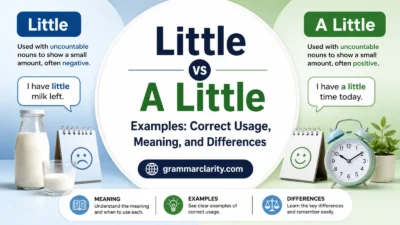
Little vs A Little Examples: Correct Usage, Meaning, and Differences
“Little” and “a little” may look almost identical, but they do not express the same idea. The only visible difference is the article “a.”…
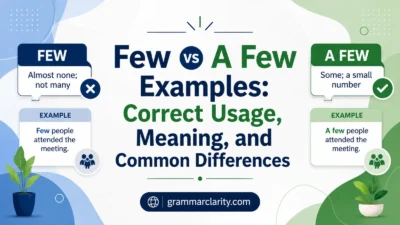
Few vs A Few Examples: Correct Usage, Meaning, and Common Differences
The difference between few and a few looks tiny, but it changes meaning more than many people expect. These two expressions both talk about…
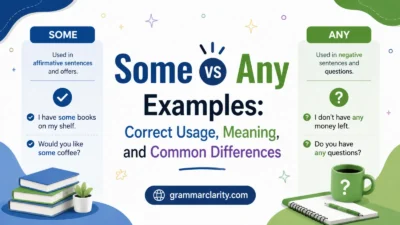
Some vs Any Examples: Correct Usage, Meaning, and Common Differences
The difference between some and any looks simple at first, but many English learners still hesitate when choosing between them. Should you…
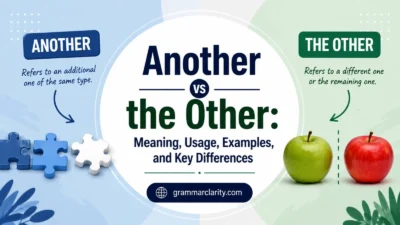
Another vs the Other: Meaning, Usage, Examples, and Key Differences
Many English learners and native speakers pause when choosing between another and the other. Both words talk about something additional, but…
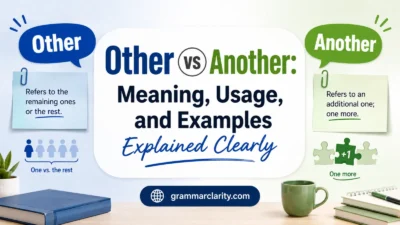
Other vs Another: Meaning, Usage, and Examples Explained Clearly
“Other” and “another” are two English words that look closely connected, and in many situations they seem almost interchangeable. Because of…
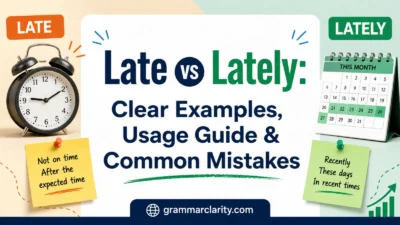
Late vs Lately: Clear Examples, Usage Guide & Common Mistakes
In everyday American English, small word choices can make a big difference in how clearly your message comes across. “Late” and…