Both can and could are correct words. The right choice depends on what you mean.
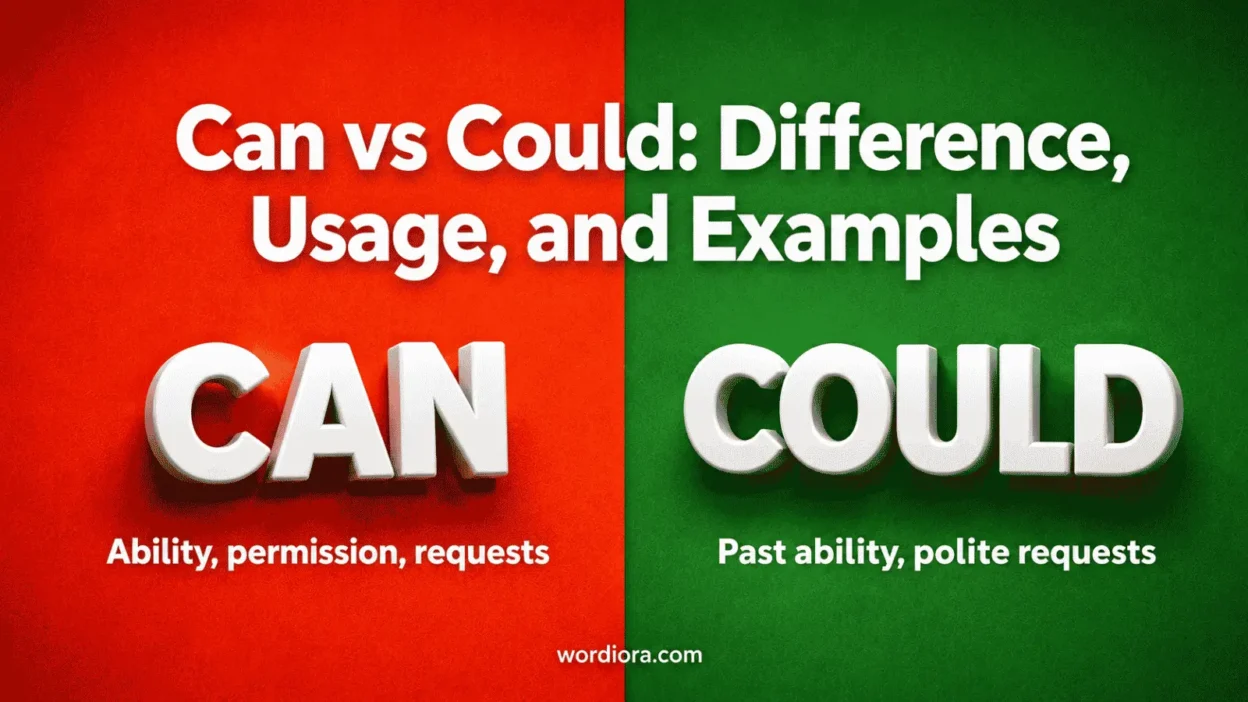
Use can for real present ability, direct permission, or a stronger possibility. Use could for past ability, softer requests, less certain possibility, or imaginary situations.
So the answer is not “one is correct and one is wrong.” The better question is: do you mean something real and current, or something past, polite, uncertain, or conditional?
Quick Answer
Use can when something is possible, allowed, or within someone’s ability now.
Example:
I can meet at 3 p.m.
Use could when something was possible in the past, is only possible in theory, or sounds more polite.
Example:
Could you send me the file?
In everyday US English, both can appear in requests. Can you help me? is normal and friendly. Could you help me? is a little softer and more polite.
Why People Confuse Them
People confuse can and could because both are modal auxiliary verbs. They work with another verb to show ability, permission, possibility, or a request.
They also overlap.
You can say:
Can you call me later?
Could you call me later?
Both are correct. The first sounds more direct. The second sounds softer.
The confusion grows because could can act like the past form of can, but it is not only a past-tense word. It can also refer to the present or future when the idea is uncertain or polite.
Key Differences At A Glance
| Context | Best Choice | Why |
|---|---|---|
| Present ability | can | Shows what someone is able to do now |
| Past general ability | could | Shows what someone was able to do before |
| Direct permission | can | Sounds clear and natural in everyday speech |
| Polite request | could | Sounds softer and less demanding |
| Stronger possibility | can | Suggests something is more real or generally true |
| Weaker possibility | could | Suggests something may happen, but is less certain |
| Imaginary condition | could | Fits “if” situations and possible outcomes |
Meaning and Usage Difference
Can points to ability, permission, or possibility that feels real.
Examples:
I can drive you to the airport.
You can use the guest Wi-Fi.
That road can get icy in January.
In those sentences, can sounds practical and direct. The ability, permission, or possibility is treated as real.
Could often points to past ability.
Example:
When I was younger, I could run five miles without stopping.
It can also show a possible but uncertain situation.
Example:
We could get rain this weekend.
Here, could does not mean past time. It means the rain is possible, but not certain.
Could also works well in conditional sentences.
Example:
I could leave early if my meeting ends on time.
That sentence depends on something else happening first.
Tone, Context, and Formality
Can is direct. It sounds normal in everyday US English, especially with people you know.
Example:
Can you text me when you get there?
That is polite enough in most casual situations.
Could is softer. It often sounds better when you want to be careful, respectful, or less demanding.
Example:
Could you text me when you get there?
The meaning is almost the same, but the tone is gentler.
In work emails, customer service messages, and formal requests, could often feels smoother.
Example:
Could you review the proposal by Friday?
Still, can is not rude by itself. Tone depends on the whole sentence, not one word alone.
Which One Should You Use?
Choose can when you mean:
You are able to do something now.
I can finish the report today.
Someone has permission.
You can park in the visitor lot.
Something is generally possible.
Heavy traffic can add 30 minutes to the drive.
Choose could when you mean:
Someone had an ability in the past.
She could read before kindergarten.
You want a softer request.
Could you lower the volume?
Something is possible but uncertain.
The package could arrive tomorrow.
Something depends on a condition.
We could go out if the weather clears.
When One Choice Sounds Wrong
Sometimes both words are grammatical, but one changes the meaning.
I can help you today means I am available and able now.
I could help you today may mean I am available, but I am not fully committing yet.
For past ability, could is usually the right choice.
Better:
When I was in college, I could stay up all night.
Awkward for that meaning:
When I was in college, I can stay up all night.
For a real current ability, can is usually clearer.
Better:
I can speak Spanish.
Different meaning:
I could speak Spanish sounds incomplete unless you add a condition or past-time context.
Common Mistakes (and Quick Fixes)
Mistake:
I could swim now.
Quick fix:
I can swim now.
Use can for present ability.
Mistake:
Yesterday, I can’t find my keys.
Quick fix:
Yesterday, I couldn’t find my keys.
Use couldn’t for past lack of ability.
Mistake:
Can you please approve this request? in a very formal email where the writer wants a softer tone.
Quick fix:
Could you please approve this request?
Both are understandable, but could sounds more careful.
Mistake:
Could means past every time.
Quick fix:
Remember that could can also mean present or future possibility.
Example:
This could be our best option.
Everyday Examples
Can:
I can pick up dinner on the way home.
Could:
I could pick up dinner if you want.
Can:
Can I borrow your charger?
Could:
Could I borrow your charger?
Can:
This app can save your receipts.
Could:
This app could save you time.
Can:
My brother can fix the sink.
Could:
My brother could fix the sink, but he’s out of town.
Compact comparison:
- Can = more direct, current, real, or certain.
- Could = softer, past, uncertain, or conditional.
- Can often fits facts and permissions.
- Could often fits requests and “if” situations.
Dictionary-Style Word Details
Verb
can: Most often used as a modal auxiliary verb before a main verb. It shows ability, permission, or possibility.
Example: I can join the call.
could: A modal auxiliary verb used for past ability, polite requests, uncertain possibility, or conditional meaning.
Example: Could you join the call?
can also has separate regular-verb meanings, such as “to put food in a can” or, informally, “to fire someone.” Those meanings are not part of the main can vs could choice.
Noun
can: A common noun meaning a metal container.
Example: She opened a can of soup.
This noun meaning is separate from the modal verb can.
could: Not commonly used as a noun in standard US English. It may appear only when someone is talking about the word itself.
Example: The sentence uses “could.”
Synonyms
can: There is no exact one-word synonym in every use. Closest plain alternatives include be able to, be allowed to, and be possible.
could: There is no exact one-word synonym in every use. Closest plain alternatives include was able to, might, would be able to, and would possibly.
Antonyms depend on the meaning. For ability, the opposite of can is often cannot or can’t. The opposite of could is often could not or couldn’t.
Example Sentences
can:
I can send the invoice this afternoon.
You can sit anywhere in this section.
Winter storms can delay flights.
could:
I could ride a bike by age six.
Could you send the invoice this afternoon?
The meeting could run late.
Word History
can: The modal verb has long been part of English and is tied to ideas of knowing how, being able, and having power to do something.
could: Could developed as the past form connected to can, but modern English also uses it for politeness, possibility, and conditional meaning.
The exact history is more detailed than most word-choice readers need. The important modern point is that could is not limited to past time.
Phrases Containing
can:
can do
can’t wait
can’t help it
as best I can
could:
could be
could have
could use
how could you
couldn’t care less
Conclusion
Use can when the meaning is present, real, direct, or more certain. Use could when the meaning is past, polite, uncertain, or conditional.
For everyday requests, both can be correct:
Can you help me? sounds direct and normal.
Could you help me? sounds softer and more polite.
That is the core difference in can vs could: can is more direct and definite; could is more flexible, softer, and less certain.