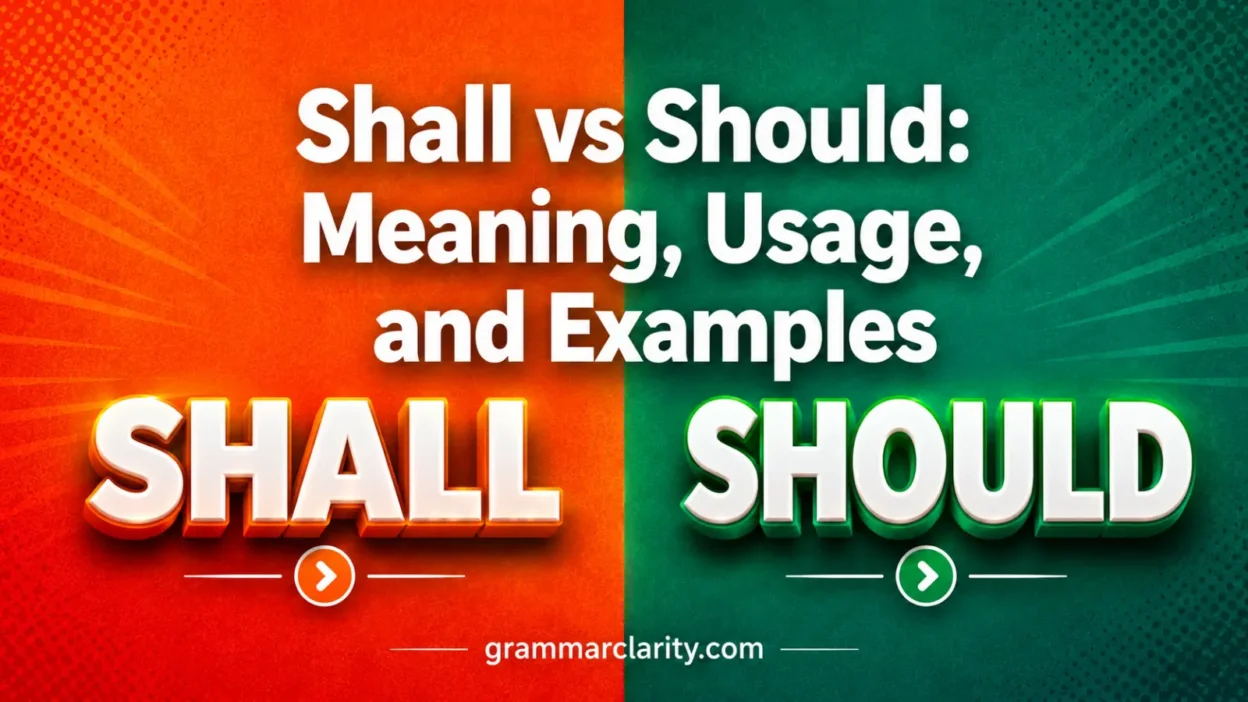
Shall vs should is a common word-choice question because both words deal with actions, duties, decisions, and expectations. They look closely related, but they do not carry the same force.
In modern American English, should is far more common in everyday writing and speech. It usually gives advice, expresses expectation, or suggests the right thing to do.
Shall is more formal. It can express a future action, a strong promise, or a requirement, especially in official, legal, or rule-based writing. In casual American English, it often sounds stiff unless it appears in a question like “Shall we begin?”
Quick Answer
Use should when you mean “ought to,” “it is a good idea,” or “it is expected.”
Use shall when you mean a formal future action, a strong promise, or a required action in formal writing.
Examples:
- You should call before you visit.
- We shall respond within 30 days.
- Shall we start the meeting?
- Employees should review the policy before signing.
The safest everyday choice is usually should. Use shall only when the tone is formal, traditional, or intentionally strong.
Why People Confuse Them
People confuse shall and should because both are modal verbs. They help another verb express attitude, obligation, likelihood, or intention.
They also share a historical connection. Should developed from shall, which makes the pair feel related. But in current usage, they have different jobs.
The confusion grows because both can appear in polite questions:
- Shall I open the window?
- Should I open the window?
The first sounds like an offer. The second asks whether opening the window is a good idea.
Key Differences At A Glance
| Context | Best Choice | Why |
|---|---|---|
| Giving advice | should | It means something is recommended or wise. |
| Asking for guidance | should | It asks what the right or best action is. |
| Making a formal offer | shall | It sounds polite and traditional. |
| Stating a formal requirement | shall | It can mark a required action in official wording. |
| Writing everyday instructions | should | It sounds natural and not overly strict. |
| Making a strong promise | shall | It gives the sentence a formal, firm tone. |
Extra comparison:
- shall = formal, firm, future-focused, sometimes rule-based
- should = practical, advisory, expected, common in everyday English
Meaning and Usage Difference
Should means that something is advisable, expected, correct, or likely.
Examples:
- You should save a copy of the file.
- The package should arrive tomorrow.
- We should leave before traffic gets worse.
In these sentences, should does not usually create a strict command. It points to the better or expected action.
Shall can express a future action, a formal decision, an offer, or a requirement.
Examples:
- We shall meet again next month.
- Shall I send the report now?
- The tenant shall pay rent on the first day of each month.
In American English, shall often feels formal. In legal or policy language, it may sound mandatory, though many modern style guides prefer clearer words like must for strict requirements.
Tone, Context, and Formality
Should is neutral and flexible. It works in emails, school writing, workplace messages, instructions, and everyday conversation.
Examples:
- You should include your phone number.
- The team should finish by Friday.
- We should double-check the address.
Shall has a more formal or old-fashioned tone. It may sound natural in offers, formal promises, contracts, rules, or ceremonial language.
Examples:
- Shall we continue?
- We shall honor the agreement.
- The applicant shall submit all required documents.
For most modern US readers, shall can feel too stiff in ordinary sentences. “I shall call you later” is grammatically possible, but “I’ll call you later” sounds more natural.
Which One Should You Use?
Use should for most everyday situations.
Choose should when you are giving advice, making a recommendation, describing an expected result, or asking what the best action is.
Examples:
- You should update your password.
- Should we bring extra chairs?
- The meeting should end by noon.
Use shall when the sentence needs a formal offer, a firm promise, or an official requirement.
Examples:
- Shall I take notes?
- We shall not forget their service.
- The contractor shall provide proof of insurance.
If you are writing plain instructions for a general audience, must is often clearer than shall for strict rules, while should works for recommendations.
When One Choice Sounds Wrong
Shall sounds wrong when the sentence is casual and no formal tone is intended.
Awkward:
- I shall grab coffee after work.
Better:
- I’ll grab coffee after work.
Should sounds wrong when the writer wants to create a strict formal duty.
Weak:
- The employee should return company property by the final workday.
Stronger:
- The employee shall return company property by the final workday.
Clearer in plain English:
- The employee must return company property by the final workday.
The key is force. Should recommends. Shall can require, promise, or formalize.
Common Mistakes (and Quick Fixes)
Mistake: Using shall just to sound more polished.
Fix: Use should, will, or must if they express your meaning more clearly.
Mistake: Using should when a rule is mandatory.
Fix: Use must for a clear requirement, especially in reader-friendly instructions.
Mistake: Treating shall and should as interchangeable.
Fix: Ask whether the sentence gives advice, asks for guidance, makes an offer, or states a requirement.
Mistake: Writing “You shall” in casual advice.
Fix: Write “You should” unless the tone is intentionally formal.
Everyday Examples
- You should drink water before the hike.
- We should check the forecast before leaving.
- Shall we order lunch for the group?
- I should be home by 7 p.m.
- The form should take about ten minutes to complete.
- We shall proceed as agreed.
- The customer should keep the receipt.
- Shall I add your name to the list?
- Students should read the instructions carefully.
- The winner shall receive a certificate at the ceremony.
Dictionary-Style Word Details
Verb
Both shall and should function as modal auxiliary verbs. They are used with a main verb.
Examples:
- I shall return.
- You should return.
Neither takes to before the main verb. Write “should call,” not “should to call.”
Noun
Shall and should are not normally used as nouns in everyday English.
In ordinary writing, do not treat them like naming words. They work as helping verbs.
Synonyms
For shall, possible substitutes include:
- will
- must
- is required to
- is expected to
- is to
For should, possible substitutes include:
- ought to
- had better
- is advised to
- is expected to
- would be wise to
The best substitute depends on the meaning. Must is stronger than should. Will is more natural than shall for many future actions.
Example Sentences
- You should review the contract before signing.
- We shall send the final version tomorrow.
- Should I include a cover letter?
- Shall we move to the next question?
- The guest should arrive any minute.
- The board shall meet once each quarter.
Word History
Should is historically connected to shall, but modern readers do not usually think of it as just the past form of shall.
Today, the words have separate uses. Should usually points to advice, expectation, or probability. Shall is more formal and often points to intention, offer, promise, or obligation.
Phrases Containing
Common phrases with shall:
- Shall we?
- Shall I?
- We shall see
- This too shall pass
Common phrases with should:
- should have
- should be
- should know better
- should you need help
- as it should be
FAQs
Is shall the same as should?
No. Should usually gives advice, expectation, or recommendation. Shall is more formal and can show a future action, offer, promise, or requirement.
Which is more common in American English, shall or should?
Should is more common in everyday American English. Shall is mostly used in formal questions, legal wording, official rules, or traditional expressions.
Is shall more formal than should?
Yes. Shall usually sounds more formal, older, or more official. Should sounds natural in most daily conversations, emails, and general writing.
Should I use shall in legal writing?
You may see shall in legal writing, but many modern plain-language guides prefer must for strict requirements because it is clearer.
What is the difference between “Shall I?” and “Should I?”
Shall I? usually offers to do something. Should I? asks whether doing something is a good idea.
Example:
- Shall I open the door? = Do you want me to open it?
- Should I open the door? = Is opening it the right choice?
Can I replace shall with will?
Often, yes, when talking about the future. “I will call tomorrow” sounds more natural than “I shall call tomorrow” in everyday American English.
Can I replace should with must?
Only when the meaning is stronger. Should suggests or recommends. Must requires.
Example:
- You should bring ID. = It is recommended.
- You must bring ID. = It is required.
Conclusion
The difference between shall vs should comes down to force and tone.
Use should for advice, recommendations, expectations, and everyday guidance. It is the more natural choice in modern American English.
Use shall for formal offers, firm promises, future statements with a traditional tone, or official requirements. Be careful with shall in plain instructions because must is often clearer for strict obligations.
When in doubt, choose should for advice and must for requirements. Save shall for formal wording where its stronger or more traditional tone is clearly intended.