

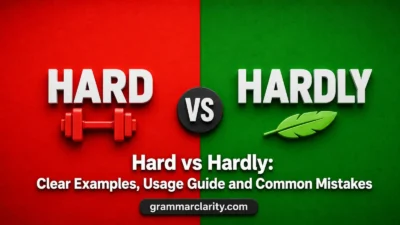
Hard vs Hardly: Clear Examples, Usage Guide and Common Mistakes
Hard and hardly are two words that frequently trip up both native speakers and English learners in the United States. Despite their similar…
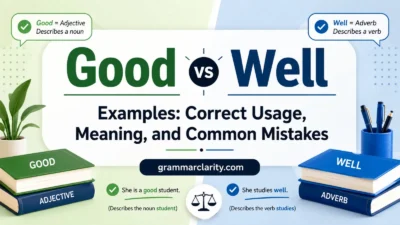
Good vs Well Examples: Correct Usage, Meaning, and Common Mistakes
“Good” and “well” are among the most commonly confused words in English. Many people hear sentences like “I’m doing good” and “I’m doing well”…
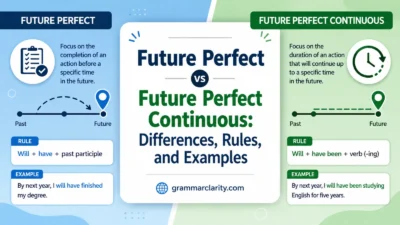
Future Perfect vs Future Perfect Continuous: Differences, Rules, and Examples
Many English learners mix up future perfect and future perfect continuous because the names look almost the same. Both talk about future…
Words Related to Back Pain: Terms, Meanings, and Examples
Words related to back pain include backache, soreness, stiffness, strain, spasm, discomfort, lumbar pain, sciatica, tension, inflammation, and…
Words Related to Baby Pregnancy: Meanings and Examples
Words related to baby pregnancy include terms about conception, pregnancy stages, prenatal care, childbirth, newborn care, and early…
Words Related to Avian: Clear Meanings and Examples
The best words related to avian are words connected to birds, bird features, bird behavior, bird habitats, and the study of birds. Some are…
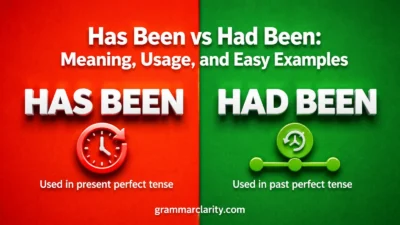
Has Been vs Had Been: Meaning, Usage, and Easy Examples
Has been vs had been is a tense choice. Use has been when something connects to the present. Use had been when something happened before…
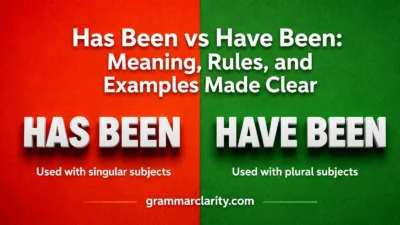
Has Been vs Have Been: Meaning, Rules, and Examples Made Clear
Has been vs have been is a subject-verb agreement choice. Both phrases are correct, but they do not work with the same subjects. Use has been…
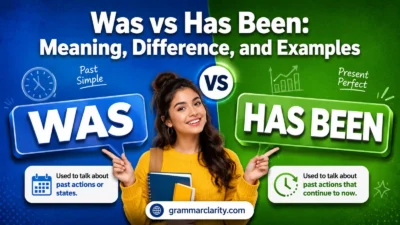
Was vs Has Been: Meaning, Difference, and Examples
The difference between was vs has been is mainly about time. Use was for something that happened or existed in the past and is finished. Use…

Was vs Were: Simple Difference, Rules, and Clear Examples
The difference between was vs were comes down to subject agreement and meaning. Both words are past-tense forms of be, but they do not fit the…