

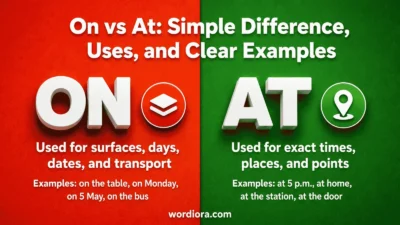
On vs At: Simple Difference, Uses, and Clear Examples
On vs at can be confusing because both words often talk about time and place. The correct choice depends on what kind of time or place you…
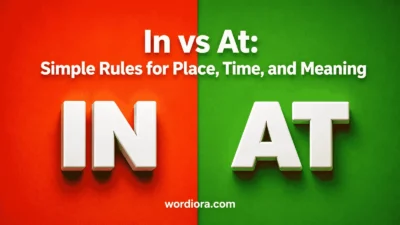
In vs At: Simple Rules for Place, Time, and Meaning
“In” and “at” can both be correct, but they do not mean the same thing. Use in when you mean inside a space, within an area, or during a…
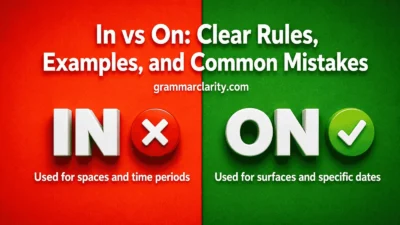
In vs On: Clear Rules, Examples, and Common Mistakes
In vs on is a common English question because both words can describe time, place, position, media, transportation, and everyday situations.…
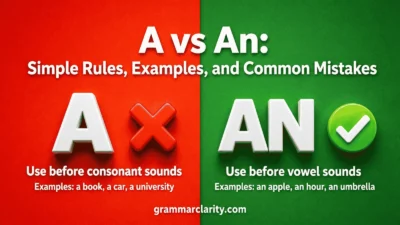
A vs An: Simple Rules, Examples, and Common Mistakes
The choice between a vs an is simple once you stop looking at the first letter and start listening to the first sound. Use a before a…
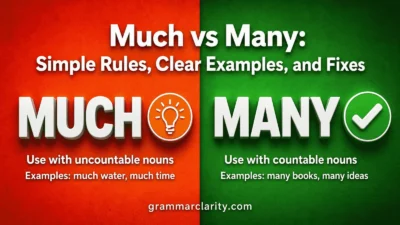
Much vs Many: Simple Rules, Clear Examples, and Fixes
Much vs many is a choice about quantity. Both words help you talk about “how large an amount” or “how large a number,” but they do not work…
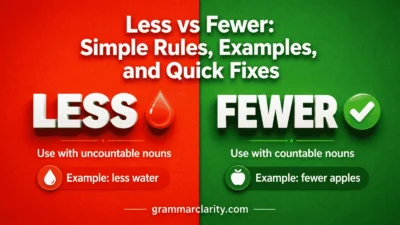
Less vs Fewer: Simple Rules, Examples, and Quick Fixes
Less vs fewer is a common word-choice problem because the basic rule is easy, but real usage has a few exceptions. Use fewer when you mean a…
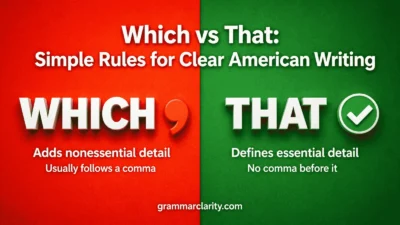
Which vs That: Simple Rules for Clear American Writing
Which vs that is a choice between two words that often introduce extra information about a noun. In American English, the safest rule is…
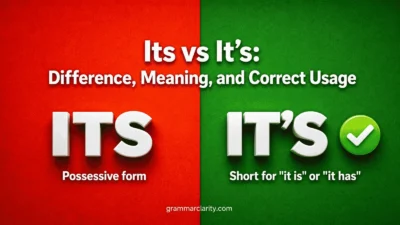
Its vs It’s: Difference, Meaning, and Correct Usage
The difference between its vs it’s is simple once you know what the apostrophe does. Its shows possession. It’s means it is or it has. The…
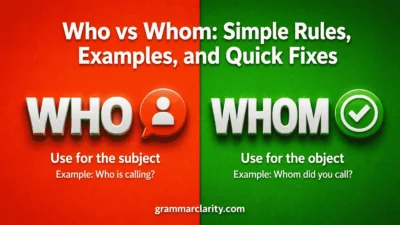
Who vs Whom: Simple Rules, Examples, and Quick Fixes
Who vs whom is a choice between two pronoun forms. Use who when the word is doing the action or acting as the subject. Use whom when the word…
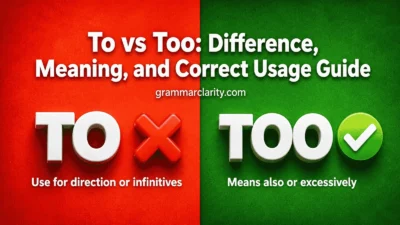
To vs Too: Difference, Meaning, and Correct Usage Guide
To vs too is a word-choice problem because the two words sound the same but do different jobs. Use to for direction, destination, purpose, or…